
Exosome Therapy For Hair Loss
Notice:
Although Exosome Therapy is a promising novel hair loss treatment modality, there are currently no FDA-approved injectable exosome products. Physicians offering exosomes, and patients receiving them, must be enrolled in a government-registered clinical trial (see clinicaltrials.gov)
Instead of exosomes, the Hair Restoration Center of Connecticut now offers the "next generation" of regenerative therapies to stimulate hair growth, TransEpidermal Delivery of serum growth factors Alma TED. This is a painless, safe, and effective FDA-approved treatment modality. This can be used in conjunction with low-level laser therapy and oral or topical medications.
Alma TED uses high-frequency acoustic waves to deliver growth factors directly to the scalp and hair follicles. Click here to learn more about the Alma TED technology, and contact our office to schedule an appointment to see if you are a good candidate for TED treatment.
Reference:
The following is for information purposes only until Exosome Therapy clinical trials are completed and FDA-approved for hair loss treatment.
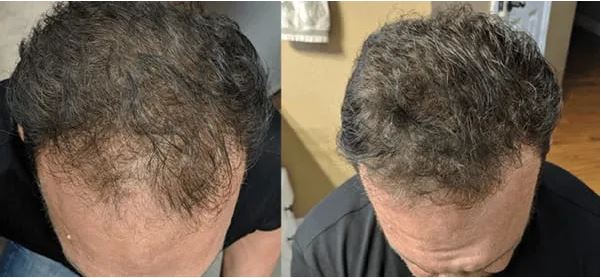
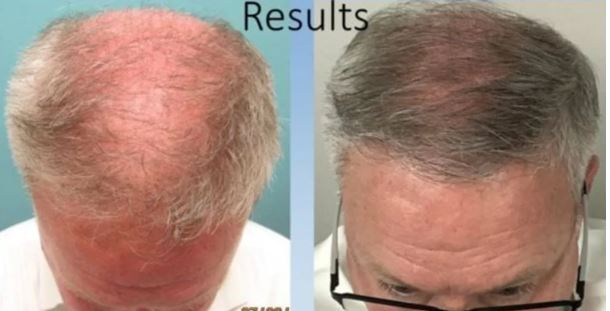
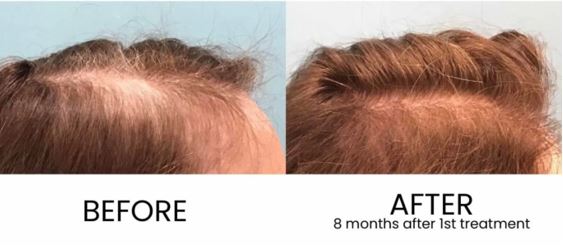
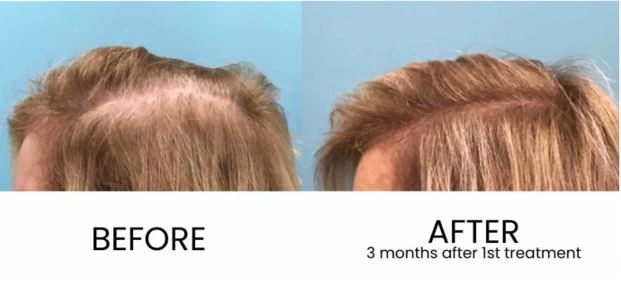
What are Exosomes?
Exosomes are extracellular vesicles that are rich in growth factors, cytokines, microRNA and mRNA which all help to promote hair growth. They can increase hair density and shaft diameter, reactivate miniaturized hairs and generate new hair growth. These vesicles modulate cell communication causing cell response for differentiation, development and growth.

Photo: https://capricor.com/exosomes/
Exovex is a mesenchymal stem cell-derived acellular growth factor from the human placenta. They are sterilized in a cGxP compliant laboratory and undergo strict screening processes to ensure that they are free from any communicable diseases such as HIV, Hepatitis C, Covid, etc.
Exosomes have been utilized in many different medical treatments, including cardiovascular diseases, burns, wound healing, joint diseases, and hair loss.
What are the benefits of exosome injection therapy for hair loss?
- Stimulation of hair growth: The growth factors and signaling molecules in exosomes can stimulate the growth of new hair follicles and promote the restoration of hair growth in areas where hair has been lost.
- Non-invasive procedure: Unlike hair transplantation surgery, exosome injection therapy is a non-invasive procedure that can be performed quickly and with little discomfort.
- Potential for long-lasting results: Exosome injection therapy has the potential to produce long-lasting results, as the growth factors and signaling molecules in exosomes can continue to promote hair growth for an extended period of time.
- Reduced risk of side effects: Exosome injection therapy carries a reduced risk of side effects compared to other treatments for hair loss, such as topical or oral medications, as it is a relatively new and minimally invasive procedure.
What has the research shown?
There are new studies on the horizon. Several preliminary studies have found that this evolving treatment is safe for use with promising results. It is not currently FDA approved yet, but is FDA registered and manufactured under strict controls.
What is the difference between Exosomes and PRP?
PRP (Platelet Rich Plasma) requires a blood draw usually from your arm which is then centrifuged to separate out the growth factors, and re-injected into the scalp. Exosomes are exogenous (from a source outside of your body), so a blood draw is not necessary.

Current Relevant Articles
Ajit, A., Nair, M. D., & Venugopal, B. (2021). Exploring the Potential of Mesenchymal Stem Cell–Derived Exosomes for the Treatment of Alopecia. Regenerative Engineering and Translational Medicine, 7, 119-128.
Kost, Y., Muskat, A., Mhaimeed, N., Nazarian, R. S., & Kobets, K. (2022). Exosome therapy in hair regeneration: A literature review of the evidence, challenges, and future opportunities. Journal of Cosmetic Dermatology, 21(8), 3226-3231.
Sasaki GH. Clinical Use of Extracellular Vesicles in the Management of Male and Female Pattern Hair Loss: A Preliminary Retrospective Institutional Review Board Safety and Efficacy Study. Aesthet Surg J Open Forum. 2022 May 24;4:ojac045. doi: 10.1093/asjof/ojac045. PMID: 35923863; PMCID: PMC9342625.